Article summary:
Old benchmark: 98 percent open rate. New benchmark: How many messages actually arrived and were welcome.
Deliverability is now a compliance problem. Registration, consent, and content all affect whether carriers accept your traffic.
One-to-one consent is real and enforceable. If you buy leads, “consent for all partners” is a landmine.
Customers opt out fast when you over-message. Frequency is now a trackable KPI.
2026 winners will measure trust: complaint rate, opt-out speed, proof-of-consent speed, and brand recognition, not just clicks.
Now, let’s talk about what SMS marketing benchmarks will actually mean in 2026, and why your raw, good numbers might not be as good as they look.
The Story Most SMBs Know Too Well
Carlos and his spouse/business partner, Regina, run a local handyman services business. They’ve recently added a business texting option to their business communication system. Their needs are clear; they want to add some marketing and promotional information for customers. But even more important, they’re trying to stop no-shows, protect revenue by filling gaps in the schedule, and make sure people actually read the message before one of their tradespeople rolls up to complete a job.
Initial numbers show that texting has helped, but that’s not the whole story for long.
After two months, replies and engagement slow down. Another month later, more “STOP” messages roll in. Then they get a complaint and realize the scary part isn’t the complaint, it’s that they can’t quickly prove who opted in, when, and for what. And for those wondering, no, screenshotting your phone thread doesn’t count as a system.
With TCPA compliance and FCC rulings shaping the way you can communicate, this is why SMS marketing benchmarks are shifting. The channel still works, but now you have to earn the right to keep using it.
Why SMS Marketing Trends and Benchmarks are Shifting in 2026
Three forces are changing what good texting performance looks like:
1) Open rates don’t tell you what you think they tell you
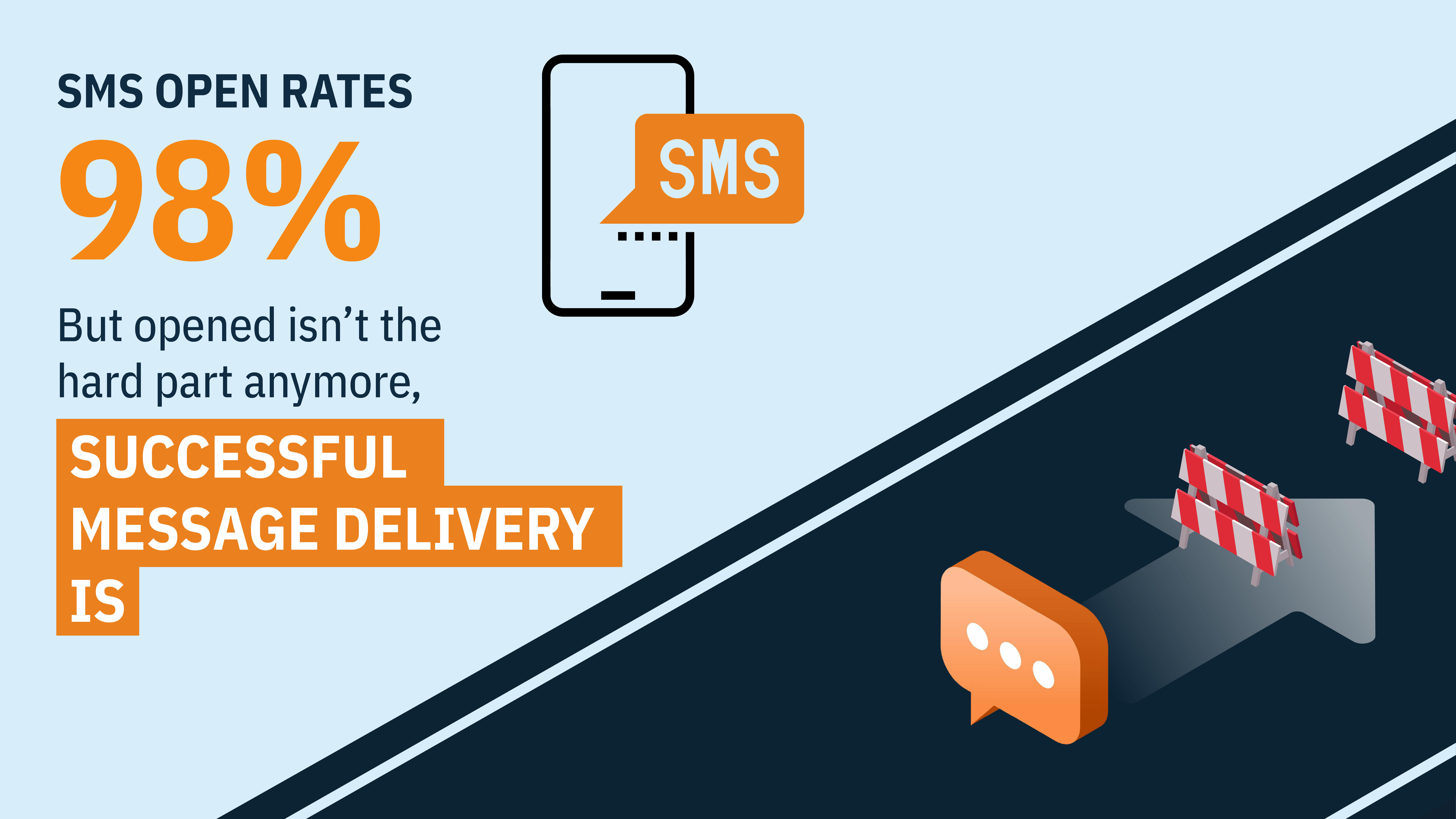
Yes, SMS still has sky-high reported open rates, often cited at around 98 percent. But opened isn’t the hard part anymore, successful message delivery is.
If messages are disrupted, delayed, or subject to increased scrutiny, your open rate can look amazing while your pipeline quietly leaks.
2) Consent expectations are getting more specific
The FCC’s one-to-one consent rule, effective January 27, 2025, requires written consent to apply to one seller at a time.
Translation: if your opt-in language is sloppy, especially in lead gen, you’re setting yourself up for 2026 performance problems and possible legal risk.
3) The ecosystem is prioritizing trust and security for a better customer experience
CTIA’s messaging guidance is clear: the industry is trying to protect consumers from unwanted messages and preserve trust.
That means there’s more scrutiny, more monitoring, and more consequences for messy programs.
Download our comprehensive FCC compliance guide
What Still Matters in Marketing Statistics: The Baseline of SMS Marketing Benchmarks
These are the table-stakes metrics you still need; don’t stop here.
Baseline benchmark | What it tells you | 2026 healthy target (typical programs) | Quick fix if you’re under |
Delivery rate (accepted + delivered) | Whether your messages are reaching phones | Aim for 95 percent+ (varies by use case + route) | Audit registration, consent language, and traffic classification |
Response rate | Whether people engage | Use case dependent | Improve relevance + timing; make replies useful (not “Reply YES to confirm” forever) |
CTR | Whether links drive action | Some industries report 21–35 percent | Shorten copy, simplify the offer, match the landing page to the message promise |
Opt-out rate | Whether you’re over-sending or off-target | Keep it low; watch for spikes (overload is a top driver) | Reduce frequency, segment harder, stop blasting everyone |
Time-to-first-reply (two-way) | Whether your team is responsive | Minutes > hours | Route replies to the right human/team fast |
One more baseline reality check: if you’re using open rate as your north star, you’re driving while staring at the speedometer and ignoring the gas gauge.

What’s Changing in 2026: The New SMS Marketing Benchmarks Businesses Must Track
Here’s the big shift: 2026 programs will be judged by permission health + trust signals.
The 2026 benchmark table that protects revenue
New benchmark | What it measures | Why it matters in 2026 | What good looks like |
Permission coverage | % of contacts with documented opt-in tied to a specific use case | One-to-one consent makes “generic opt-in” risky | Near 100% for outbound campaigns |
Consent quality | Whether opt-in language is clear, brand-specific, and auditable | Vague disclosures = performance surprises later | Clear disclosure + match to message purpose |
Opt-out enforcement speed | How fast STOP and other revocations are honored across teams/tools | Slow suppression creates complaints and escalations | Near real-time internally; consistent across tools |
Complaint rate | “This is spam” signals + direct complaints | Complaints are a trust tax and can trigger filtering by carriers | Track per 10k sends; treat spikes as incidents |
Registry readiness | Brand + campaign registration completeness, accuracy, and upkeep | Registration is a deliverability lever, not paperwork | “Always current,” not “set it and forget it” |
Time-to-proof | How fast you can produce consent + message history for a complaint/audit | When issues hit, speed matters | Under 10 minutes is a strong operational goal |
Brand recognition | Does the recipient immediately know it’s you? | Trust drives engagement and reduces opt-outs | Consistent sender identity, consistent message context |
This is how SMS marketing benchmarks become more than marketing metrics; they become powerful operational metrics.

Business Messaging Trends Driving These New Benchmarks
You can call these business messaging trends or SMS marketing trends, but the effect is the same: performance and compliance are merging.
Trend 1: Two-way mobile messaging is becoming the default expectation
In 2025, research data found that 71 percent of customers prefer the ability to text the business. So, your benchmark is more than what we sent; it’s about handling both incoming and outgoing messages well.
Trend 2: Deliverability is becoming the #1 buying factor
At this point, the ability to provide a messaging platform is expected, but where a provider stands out is the promise of deliverability. 2026 benchmarking will start with deliverability before engagement.
Trend 3: The industry is actively tightening unwanted message defenses
CTIA’s security best practices emphasize protecting consumers from unwanted messages and preserving trust. This is why beating the drum to send more is not a strategy anymore. It’s a gamble.
Trend 4: Opt-out spikes are becoming a leading indicator
Customers are feeling the strain of overcommunication, and message overload is becoming a major opt-out driver. In 2026, frequency discipline will be a benchmark you report to leadership.
Why SMS Marketing Platforms and Messaging Strategies Must Evolve
If you’re measuring 2026 reality, your tooling needs to support it.
A modern platform should help you:
Build compliance workflows into the send process, not after you receive a complaint
Handle opt-in and opt-out cleanly across users, numbers, and tools
Support campaign registration and governance so you don’t lose weeks to confusion
Create audit-ready records and make it easy to export them fast
Treat security realistically. SMS itself is not end-to-end encrypted, so you need strong controls around storage, access, and retention, especially for regulated teams.
How Approved Contact Supports 2026-Ready SMS Marketing Benchmarks
Approved Contact’s philosophy is simple: earn trust, respect privacy, and make compliance practical. Here’s what that looks like as benchmarks you can actually run your program on:
Built for deliverability + trust
Automated 10DLC and campaign workflows so registration stops being a mystery project.
Consistent opt-out handling across teams, so STOP doesn’t become somebody else’s problem.
Audit-ready archiving + fast exports so you can prove what happened without digging through chaos.
Built for real teams, especially SMBs
Text from the collaboration tools your people already live in (Teams/Webex/Zoom/RingCentral), so adoption is realistic, not aspirational.
Practical workflows that help you stay permissioned and consistent, even when you’re busy.
If you want a clear next step: explore Approved Contact as your SMS marketing platform and see what ready looks like when the system does the heavy lifting.
What High-Performing Businesses Will Do Differently in 2026
Use this as your 2026 benchmark checklist:
Map every message type to a documented consent path: brand + use case, not general marketing.
Treat deliverability as a KPI you defend, not something you assume.
Build frequency rules and measure opt-out spikes like incidents.
Make opt-out universal and fast: STOP should work the same way every time.
Track “time-to-proof” so when something goes sideways, you can resolve it quickly.
Benchmark trust, not just engagement: complaint rate, suppression accuracy, and brand recognition.
2026 SMS Marketing Benchmarks are About Trust You Can Measure
In 2026, the brands that win with SMS marketing benchmarks will be the ones that are most provable.
They’ll know:
Who opted in
What they opted in to
How they can opt out
How fast the business can prove all of it
If your current program is built on open rates and hope, you’ll be losing out in 2026. Approved Contact with Permissions behind it is built for the next version of SMS: compliant, trusted, and scalable. Are you ready to be a leader in compliant customer communication? Contact Approved Contact today!