Proof of consent is the difference between a controlled compliance response and a problem that just won’t quit. Approved Contact + Permissions are built to help organizations store, manage, and retrieve consent as a defensible record across channels, teams, and systems.

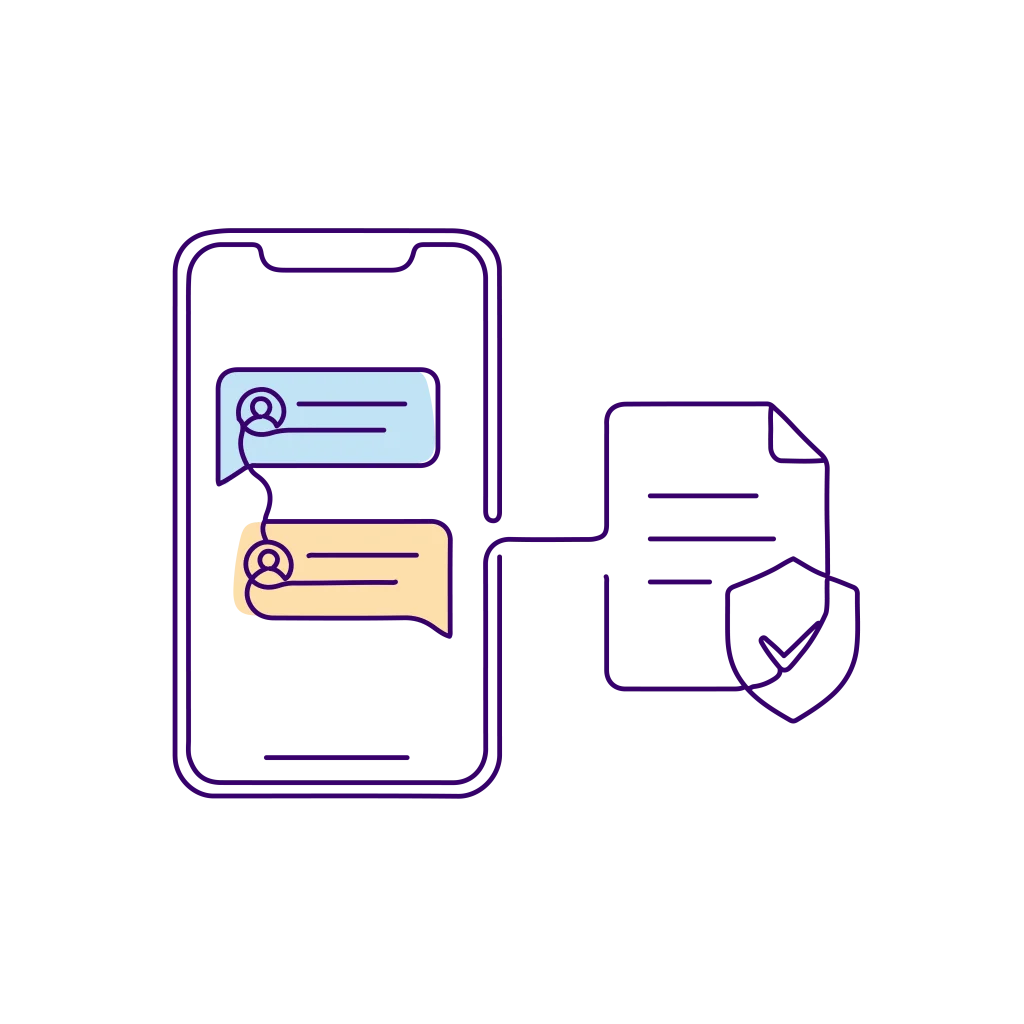
Most businesses assume that having message history somewhere means they’re covered. That’s like saying a receipt proves the credit card belonged to you. It shows activity. It doesn’t prove permission.
That’s why consent needs its own system. One that’s independent of messaging logs so it can stand on its own as evidence. That’s exactly what Permissions is built to be.
The need for proof never shows up at a convenient time. It appears under pressure, when your records are expected to be complete, accessible, and defensible without delay.
It only becomes urgent when something goes wrong:
If you can’t produce evidence quickly, every variable worsens. Investigations take longer, responses lose clarity, legal exposure increases, and in many cases, messaging programs are paused until the issue is resolved.
Approved Contact + Permissions function as a centralized consent infrastructure layer—designed to be the source of truth when questions come up, not another system you’re hoping someone kept updated.
This is what consent management software is supposed to do: make proof straightforward when everything else gets complicated.
Your customers don’t interact with you through a single channel — and your consent program can’t afford to either. A customer may consent to texts but not calls. A sales team may capture consent differently than support. When records live in separate systems, the gaps between them become your liability.
When a complaint comes in, you need to pull one record that tells the complete story. Permissions is built to be that record.
Permissions closes the gaps across departments and channels.
Track and enforce revocations wherever they happen; text, voice, email, or form.
Consent is tied to the right party, use case, and channel, not just a name in a database.
Permissions is designed to be independent of messaging logs but it works alongside Approved Contact’s business messaging infrastructure. That separation matters more than most teams realize.
Messaging systems handle conversations and workflows
Consent systems handle permission evidence and lifecycle
Compliance workflows connect the two when you need to demonstrate both
Consent infrastructure only works if the messages being sent are inside a governed system in the first place. When users text from personal phones, consent records and message logs end up in different universes.
AC brings compliant texting inside the UC platforms your teams already use, closing the shadow texting gap before it becomes a consent gap.
No. A message log shows activity—what was sent, when, and by whom. Proof of consent shows permission evidence: how it was obtained, what was agreed to, and whether it was ever revoked.
Build a consistent consent process, store it in a centralized audit-ready repository, and enforce opt-outs and governance in execution. Start with the infrastructure, not the policy slide deck.
One complaint is all it takes to need proof. Risk isn’t based on how often you text—it’s determined by whether you can defend the program when questioned.
No. Most organizations use multiple channels, and consent can be granted or revoked across any of them. That’s why Permissions is built to support SMS, voice, and email in a single system.
If you want to reduce messaging risk, start with permission evidence—not policy documents, not training sessions, not a terms-of-service update. In a compliance walkthrough, we’ll map how your organization collects consent today, where the gaps are across teams and channels, and exactly what defensible proof looks like in a real audit scenario.